Computer Relief Lenses Explained: Types, Differences, and Our Top Pick
If you spend most of your day on a laptop, phone, or second monitor, your eyes are working harder than a standard pair of glasses was designed for. That is where computer relief lenses (also called digital or anti-fatigue lenses) come in.
Below is a clear breakdown of the main lens types, how they differ, and why Sequel lenses are SKEYEs top recommendation for everyday screen comfort.
Our main recommendation: Sequel lenses
Sequel is our leading pick for patients who want clearer, more comfortable vision on screens and in real life—not a specialty pair you only wear at the desk.
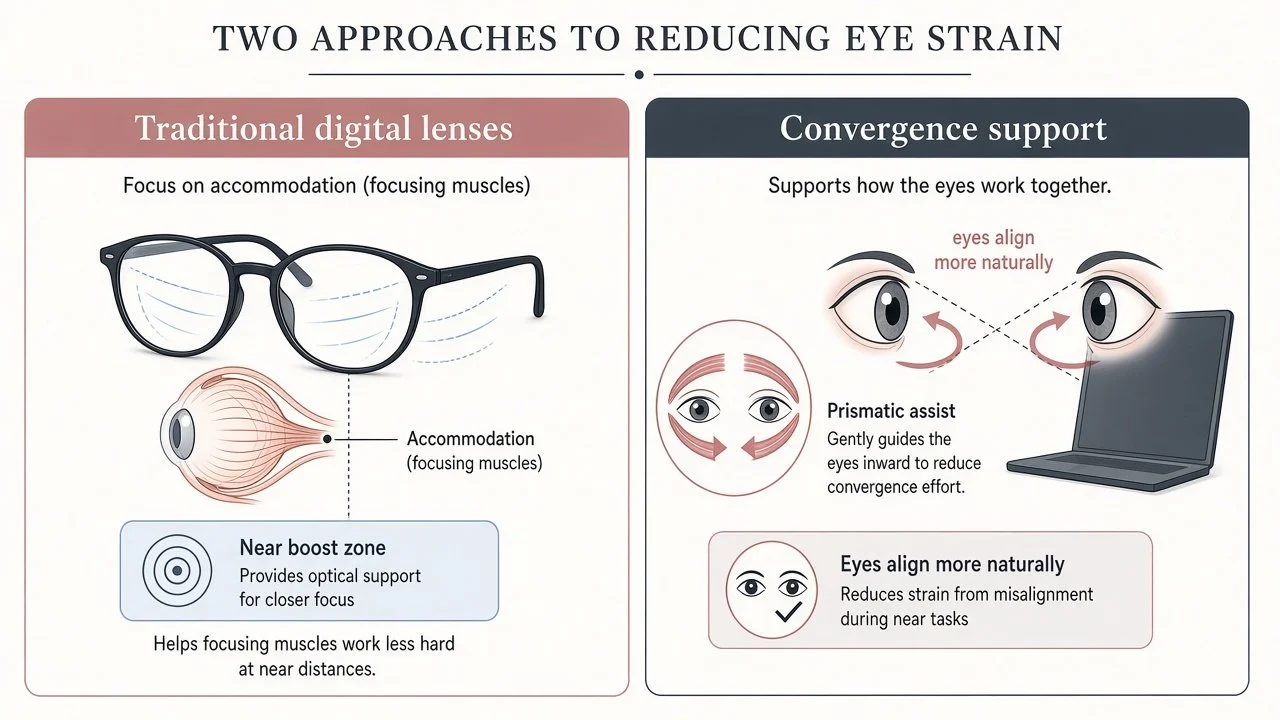
What sets Sequel apart is Convergence Boost technology. Most traditional digital lenses mainly help with accommodation (how hard your focusing muscles work up close). Sequel also supports convergence—how your two eyes turn inward and work together during hours of near and intermediate focus. That dual approach is why we lead with Sequel when patients describe tired eyes, screen discomfort, or end-of-day eye fatigue.
Sequel comes in a portfolio that fits different ages and lifestyles, including:
Sequel 0 — everyday single vision with Convergence Boost
Sequel 38 — single vision with a light 0.38D near boost
Sequel 67 — single vision with a 0.67D near boost
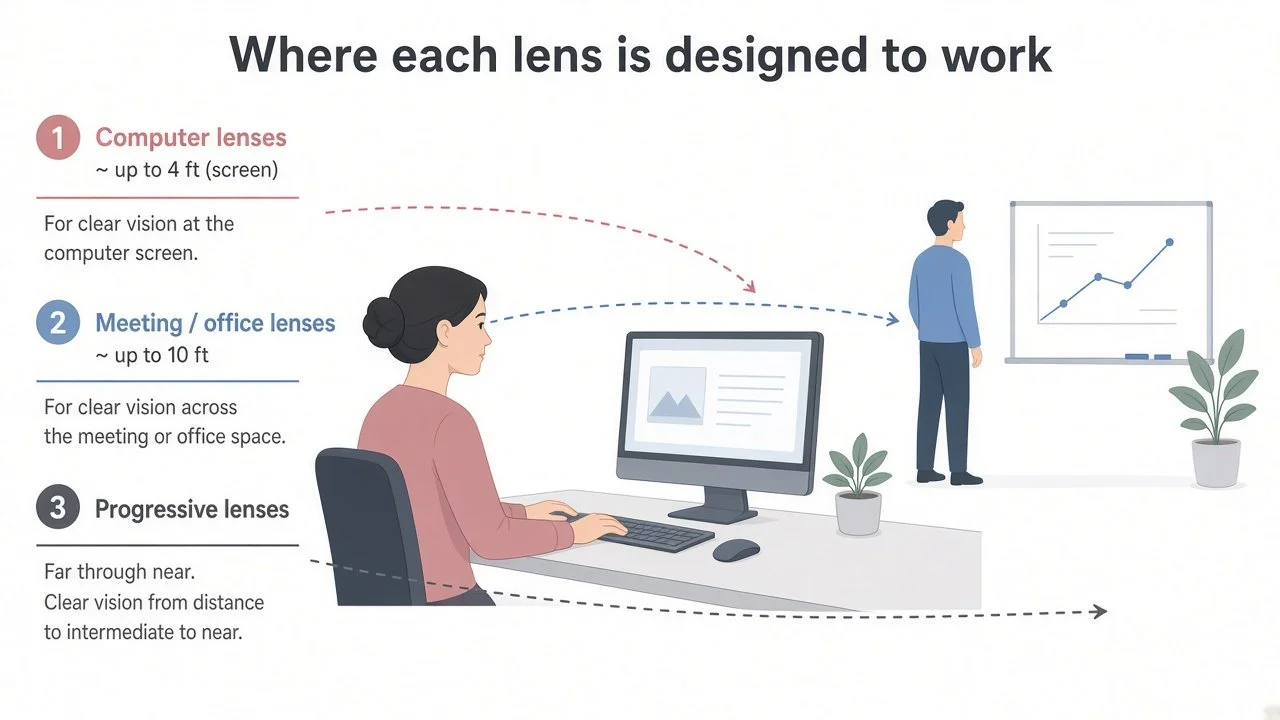
Sequel PAL — progressive design for patients who need distance through near. Sequel Computer — optimized for heavy computer use, with support up to about 4 feet (typical screen distance)
Sequel Meeting — balanced for desk and around-the-office vision, with support up to about 10 feet
Sequel is available through VSP for many plans (coverage depends on your individual benefits).
According to Sequel’s consumer product testing among people who already had digital eye strain symptoms, 91% of wearers reported a reduction in issues commonly associated with digital eye strain (Sequel 38 and Sequel 67 designs; small study samples). Your SKEYE eye doctor can confirm whether Sequel—or a more therapeutic option—is the right fit for your symptoms.
What are computer relief lenses?
Computer relief and digital lenses are designed for prolonged near and intermediate workscreens, documents, and desk tasks. Many designs add a small boost of plus power in the lower part of the lens so your focusing system does less work during long sessions.
They are not the same as blue-light coatings alone, reading glasses only, or full progressive lenses. Blue-light coatings may help some people but are not a full computer-lens design. Reading glasses are near-only, while progressives cover distance, intermediate, and near for presbyopia.
The main types of computer relief lenses
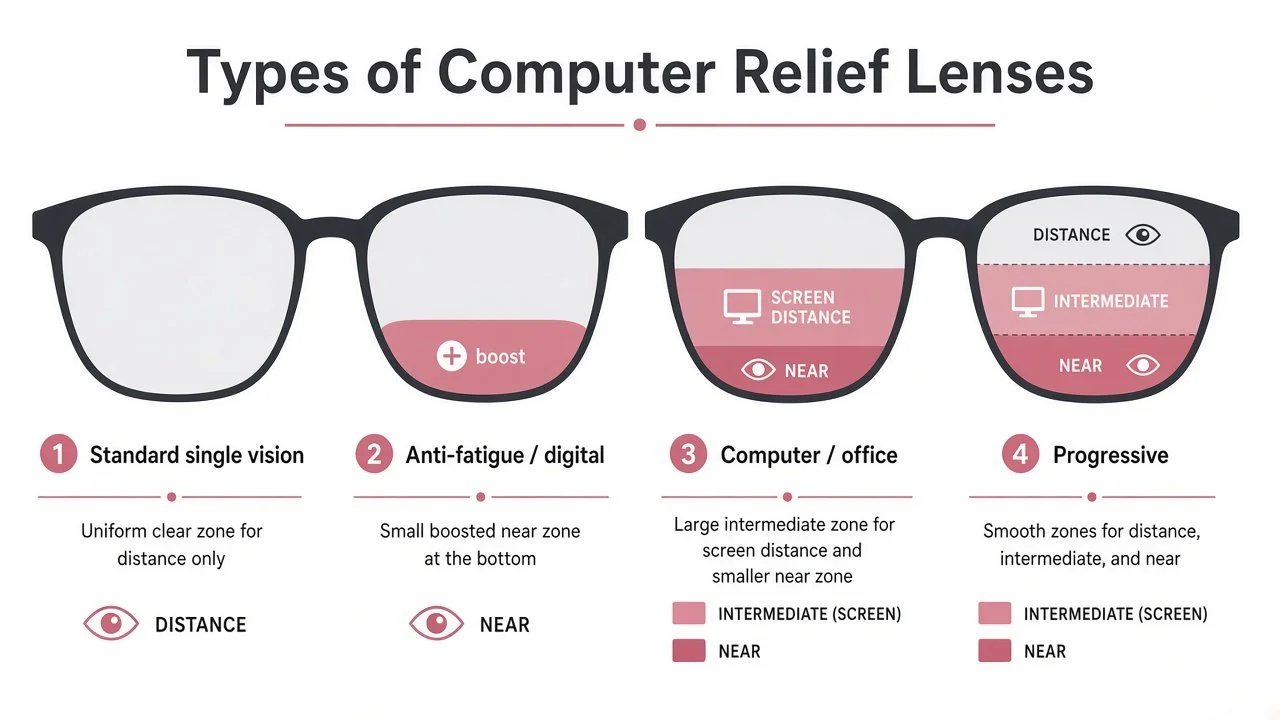
Standard single vision: clear power across the whole lens for one distance. Best for simple prescriptions and lighter screen time; no dedicated boost.
Anti-fatigue and digital lenses: look like single vision with a subtle near boost. Best for students, young adults, and pre-presbyopes who feel strain from phones, laptops, and close work.
Computer and office lenses: built around monitor and desk distance. Best for desk-heavy days and workspace-optimized vision.
Progressive lenses: blend distance, intermediate, and near. Best for adults who need one pair for far, mid, and near.
Quick comparison
Standard single vision: one clear distance, no near support, best for light screen users.
Anti-fatigue and digital: ease near focusing with a small lower boost, best for heavy phone and laptop users.
Computer and office: desk and monitor clarity, best for desk workdays.
Progressive: far, mid, and near, best for adults needing one all-distance pair.
Sequel: comfort and clarity on and off screen with boost options plus Convergence Boost, best for screen-heavy lifestyles.
How to choose the right computer relief lenses
Consider your screen hours, whether you still see well at distance, and whether your work is mostly a monitor or also meetings across the room. Tired eyes and screen discomfort often point toward digital or Sequel options. Severe headaches, neck pain, or motion-related symptoms may need a more therapeutic evaluation.
Get a current eye exam at SKEYE. The right boost, design, and fit come from your prescription, visual demands, and how your eyes work together—not from a one-size-fits-all online chart.
Bottom line
Computer relief lenses are a family of designs that support screen and near work in different ways. Anti-fatigue lenses add a small near boost. Computer and office lenses prioritize desk distances. Progressives cover the full range for aging near vision.
Our main recommendation is Sequel, because Convergence Boost supports both clearer focusing and more natural eye teamwork during today’s screen-heavy days—with options from everyday single vision to Computer, Meeting, and progressive designs.
Ready to find the right pair? Book an eye exam at SKEYE and ask which Sequel design matches your workday.ar.